labels
|
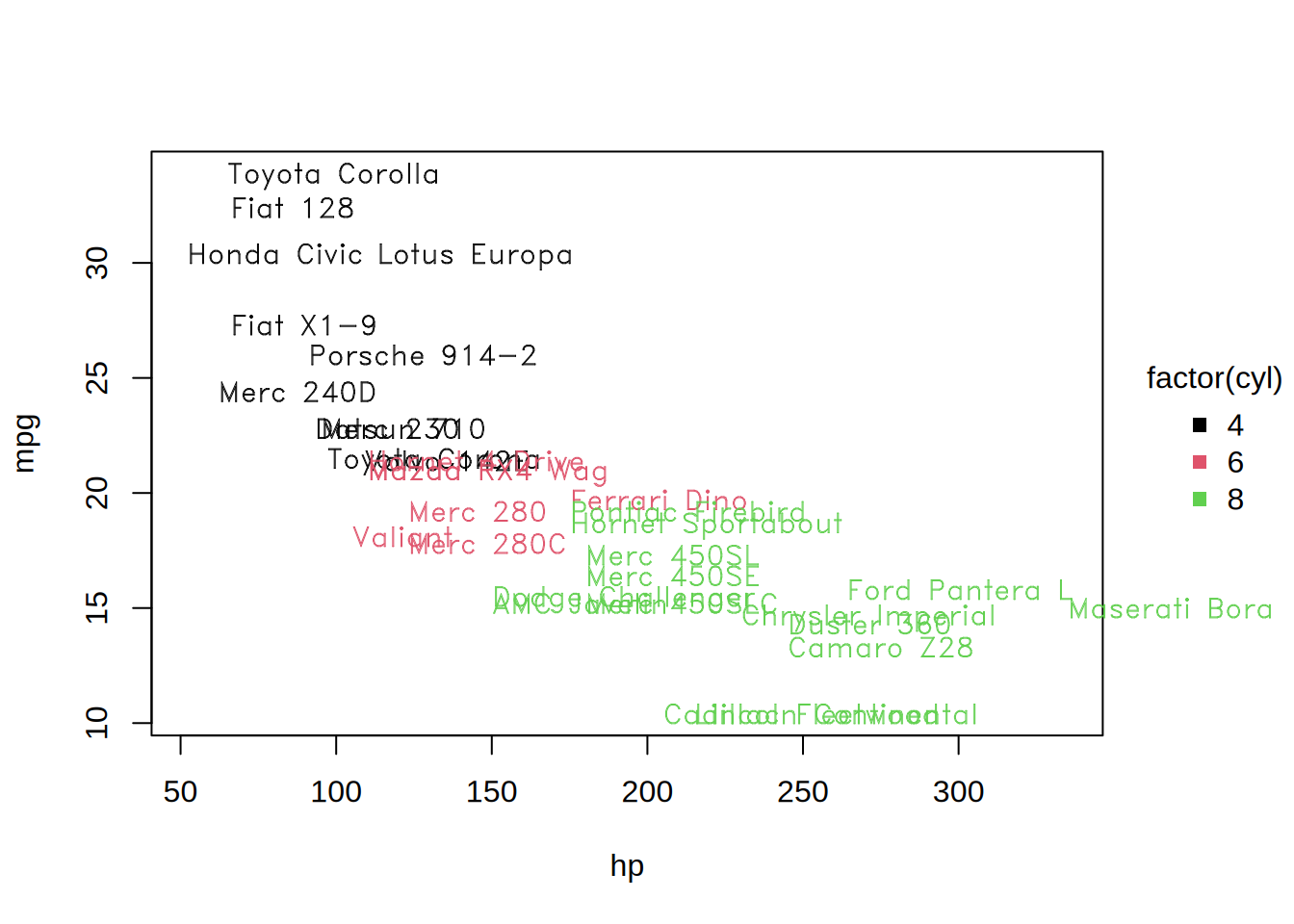
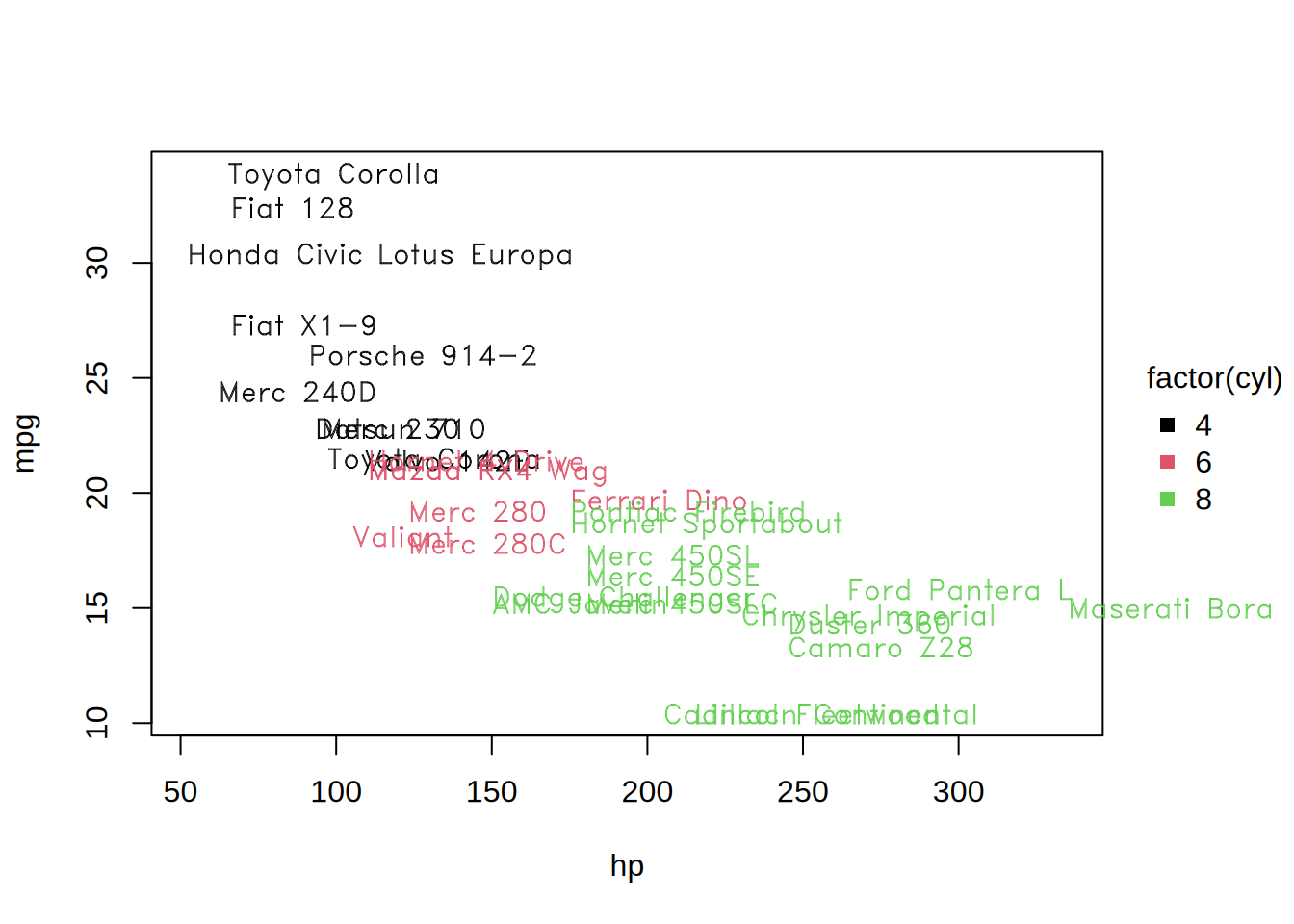
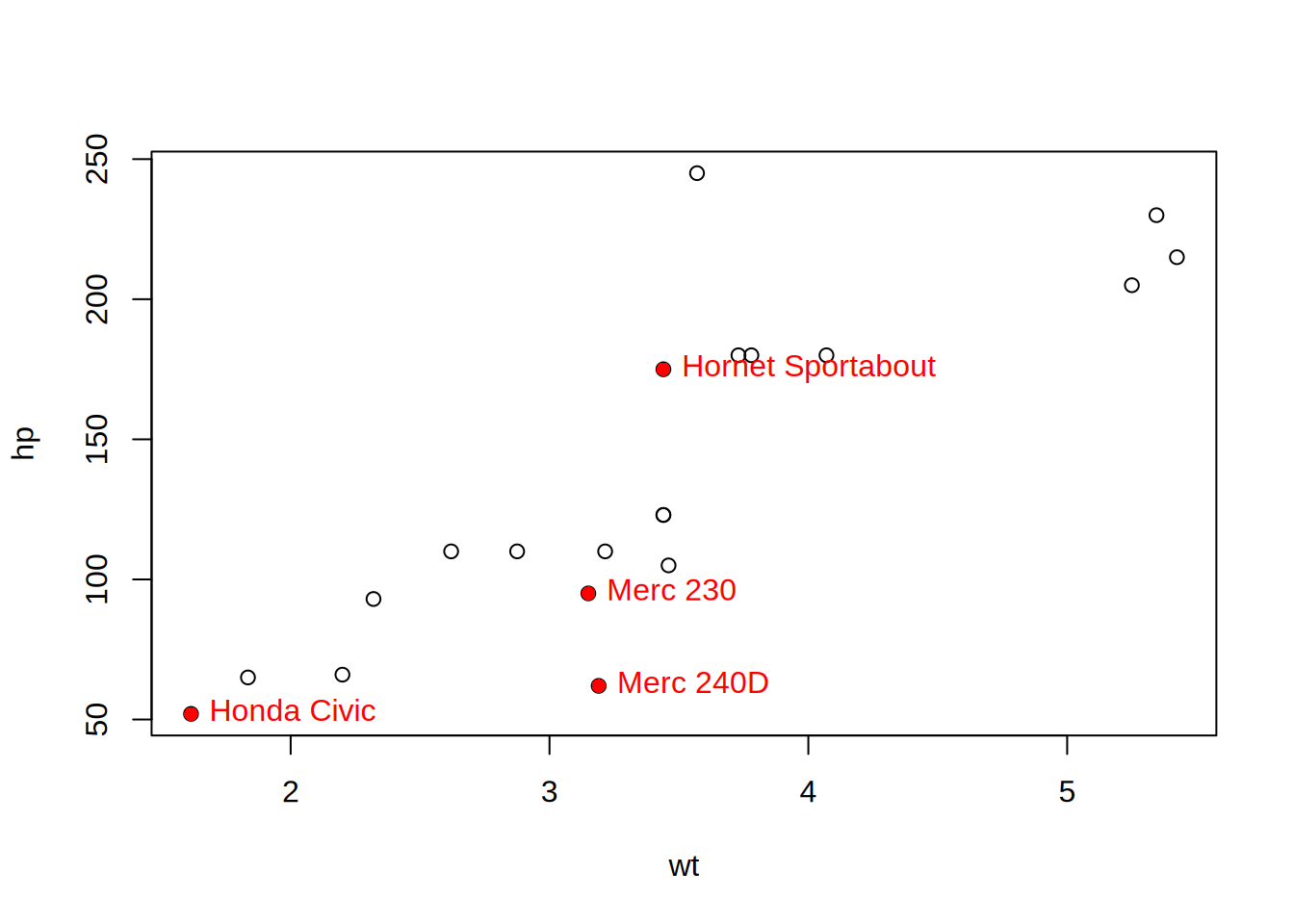
Character vector of length 1 or the same length as the number of x,y coordinates. If left as NULL, then the labels will automatically inherit the corresponding y values. Can also be supplied as a top-level tinyplot argument, which additionally supports non-standard evaluation against data and takes precedence if both are given. See Examples.
|
labeller
|
A formatting function, convenience string, or dictionary (named vector or list) passed to tinylabel for formatting or relabelling the labels. Useful for ensuring that the text labels match the formatting of an axis, e.g. labeller = “%” to display the labels as percentages. Default is NULL, i.e. no formatting. See Examples.
|
adj
|
one or two values in \([0, 1]\) which specify the x (and optionally y) adjustment (‘justification’) of the labels, with 0 for left/bottom, 1 for right/top, and 0.5 for centered. On most devices values outside \([0, 1]\) will also work. See below.
|
pos
|
a position specifier for the text. If specified this overrides any adj value given. Values of 1, 2, 3 and 4, respectively indicate positions below, to the left of, above and to the right of the specified (x,y) coordinates.
|
offset
|
when pos is specified, this value controls the distance (‘offset’) of the text label from the specified coordinate in fractions of a character width.
|
family
|
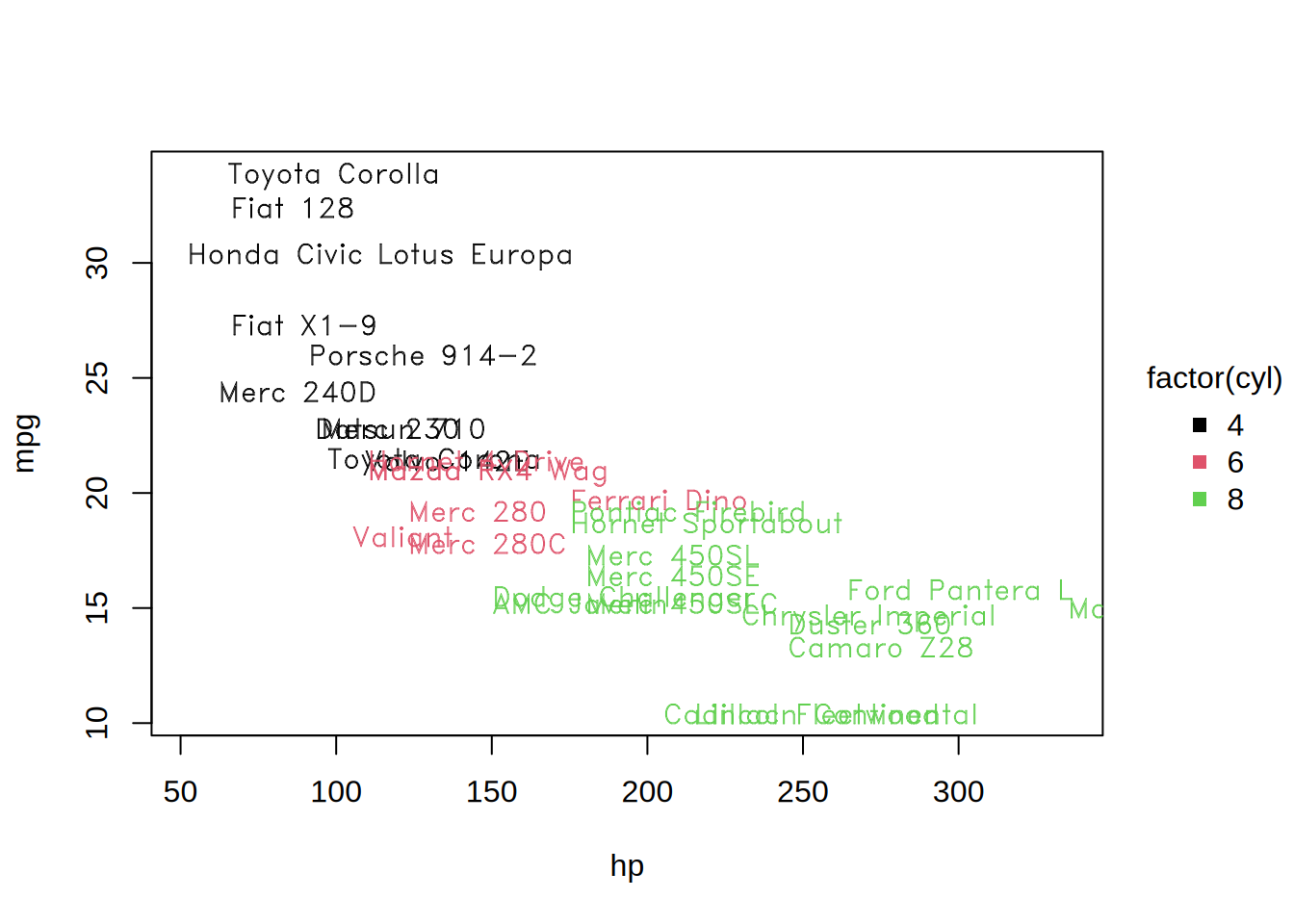
The name of a font family. Default of NULL means that the family will be the same as the main plot text, following par. Note that if a family argument is provided, then vfont (below) will automatically be ignored.
|
font
|
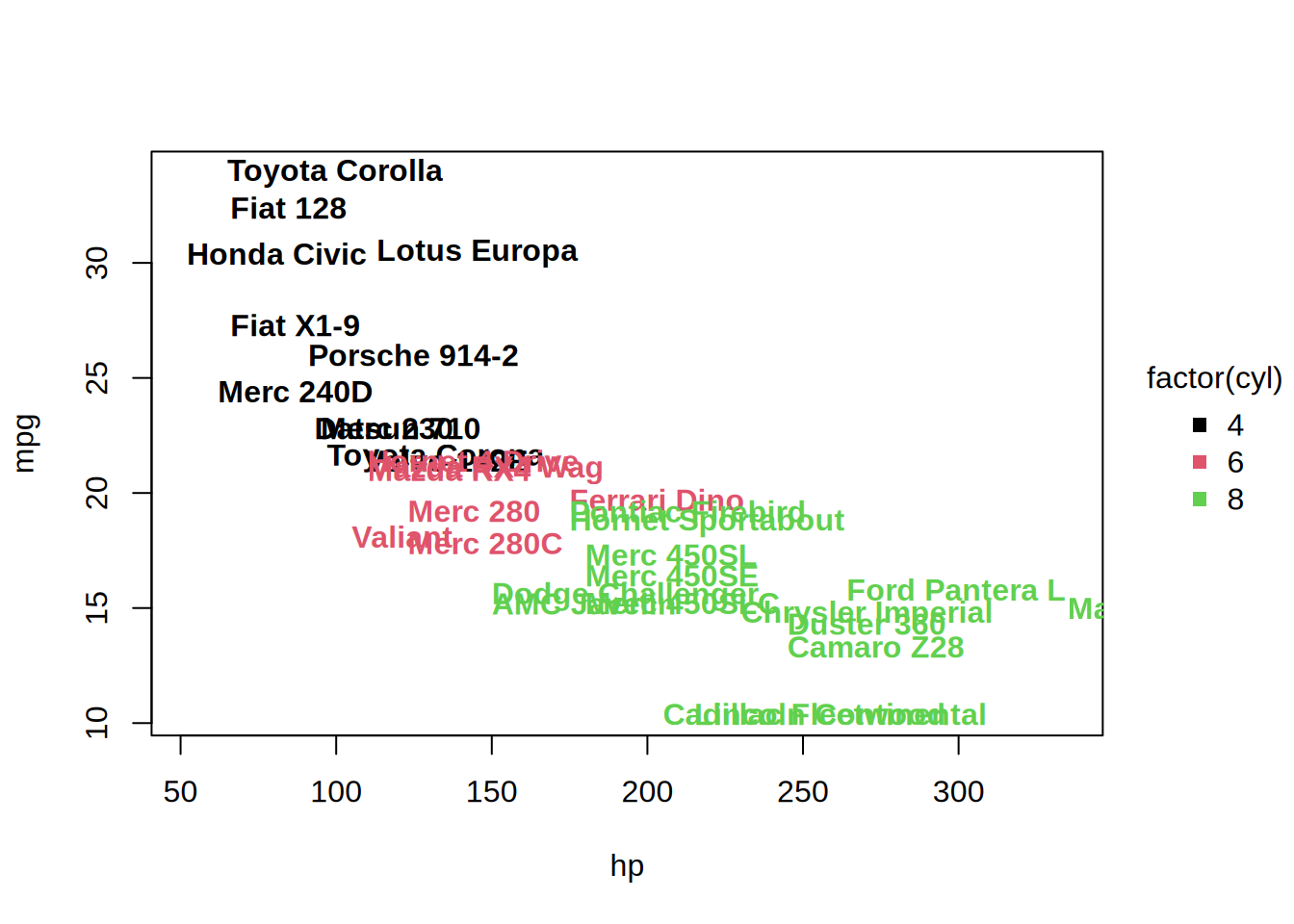
Integer giving the font face to be used, following par. On most devices, the mapping is: 1 = regular, 2 = bold, 3 = italic, 4 = bold italic, and 5 = symbol.
|
vfont
|
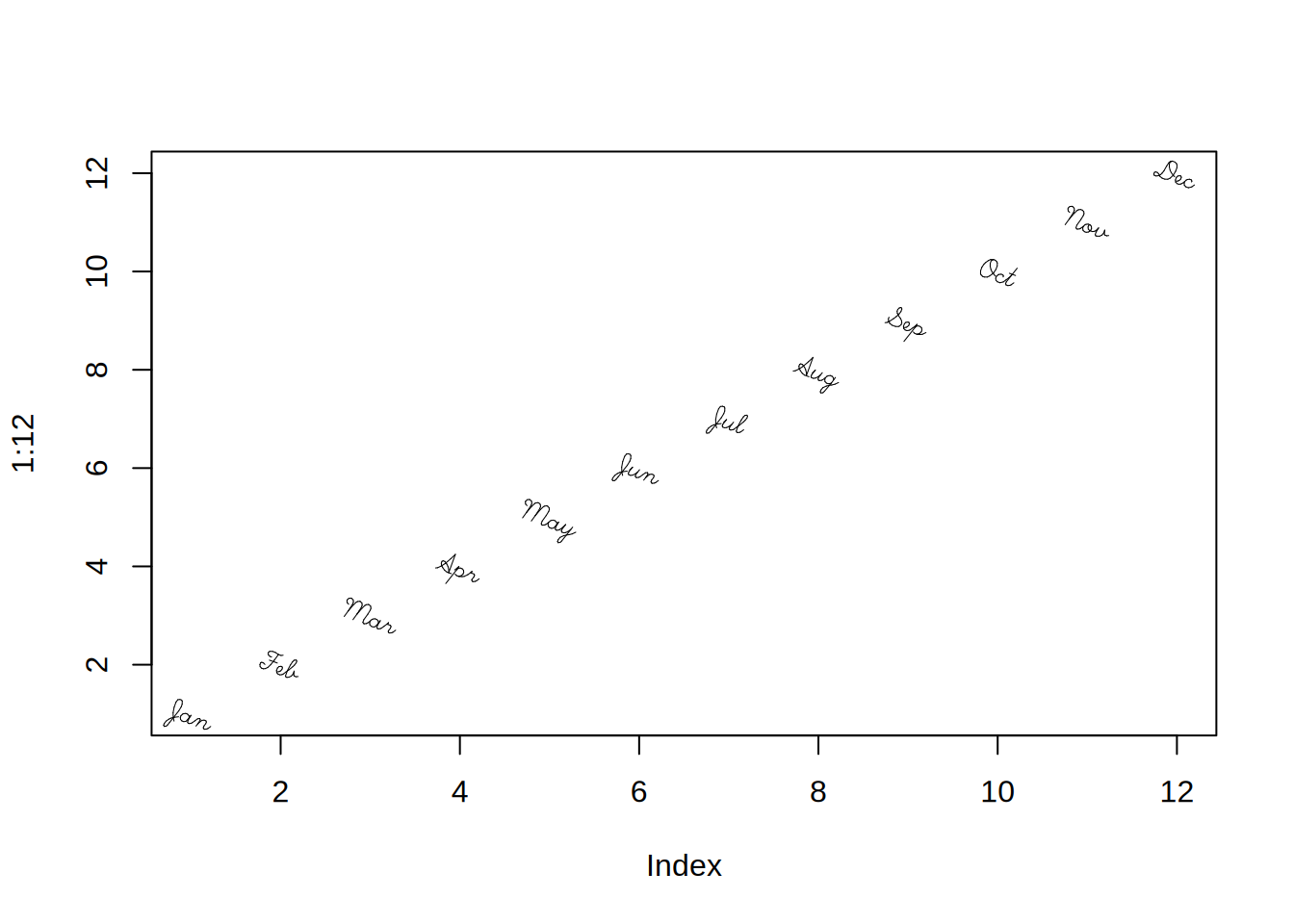
NULL for the current font family, or a character vector of length 2 for Hershey vector fonts. The first element of the vector selects a typeface and the second element selects a style. Ignored if labels is an expression.
|
xpd
|
Logical value or NA denoting text clipping behaviour, following par.
|
srt
|
Numeric giving the desired string rotation in degrees.
|
repel
|
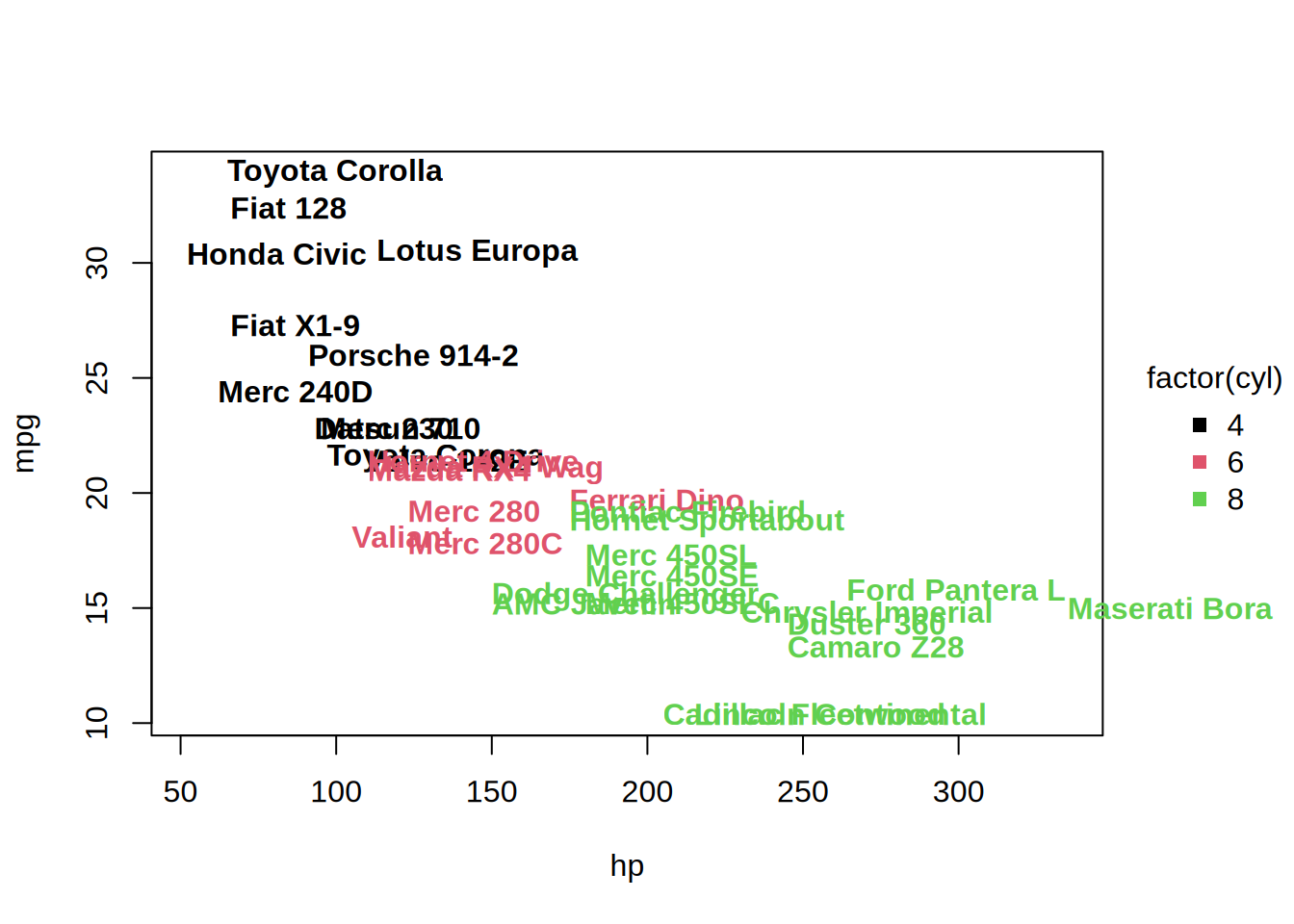
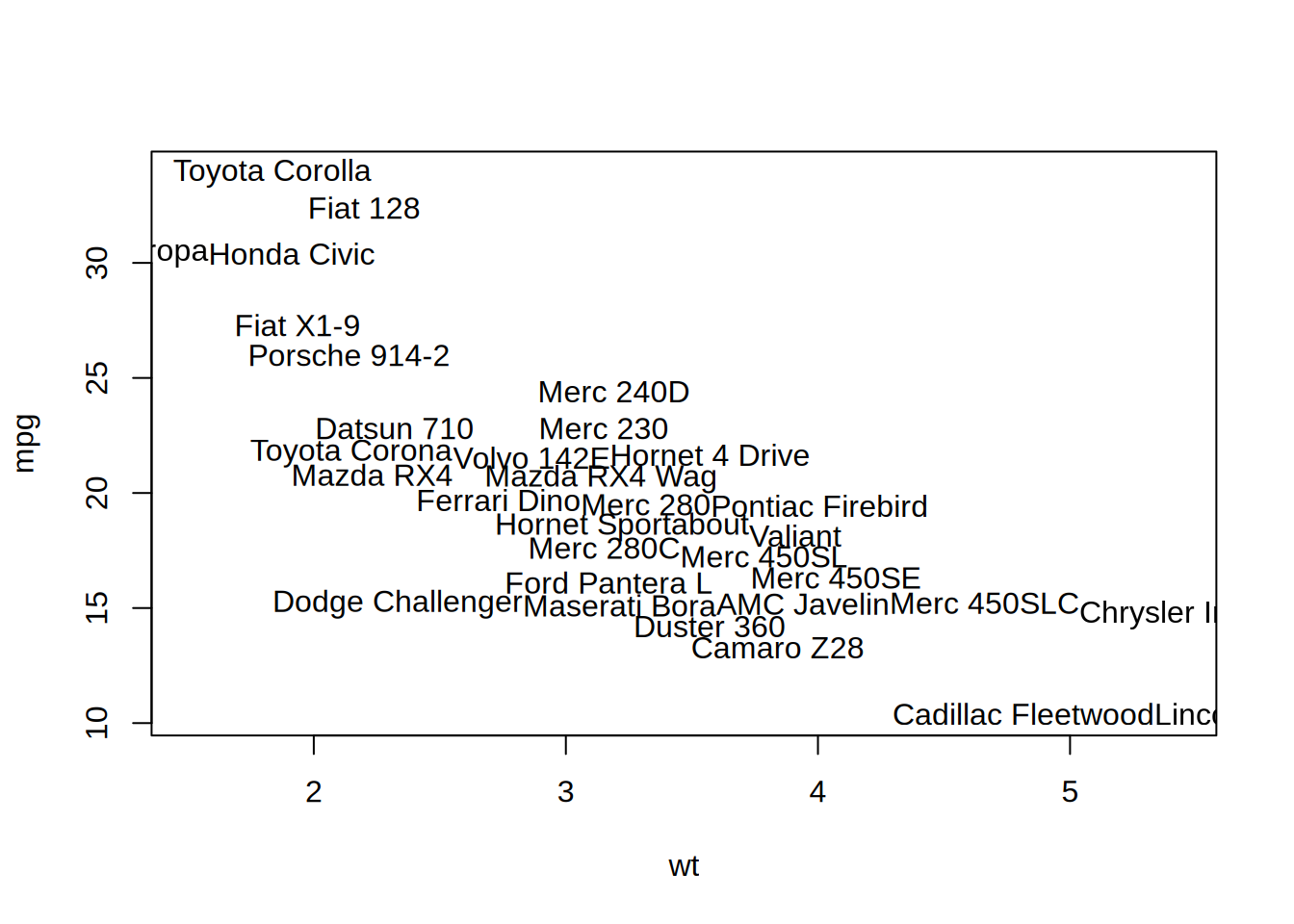
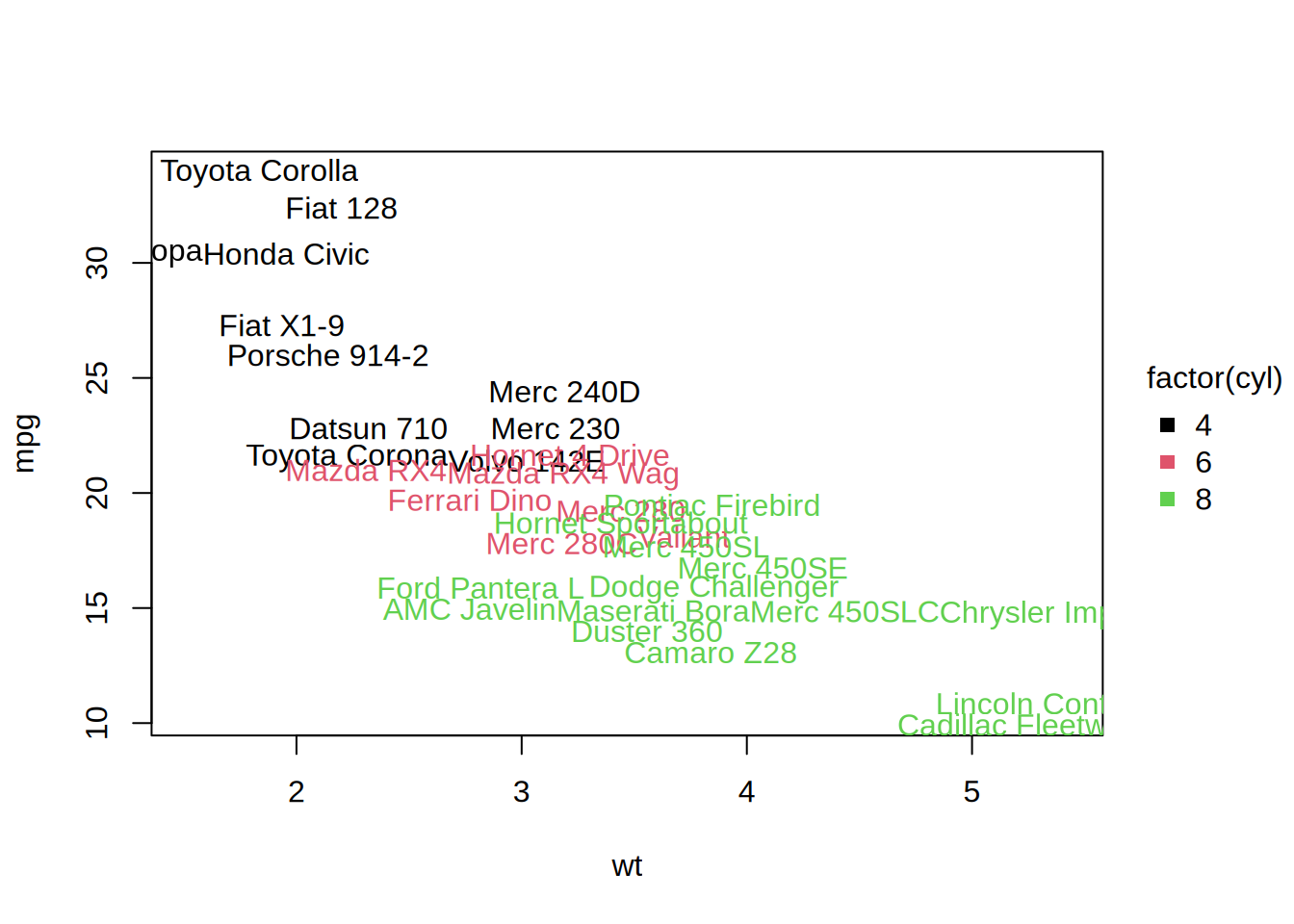
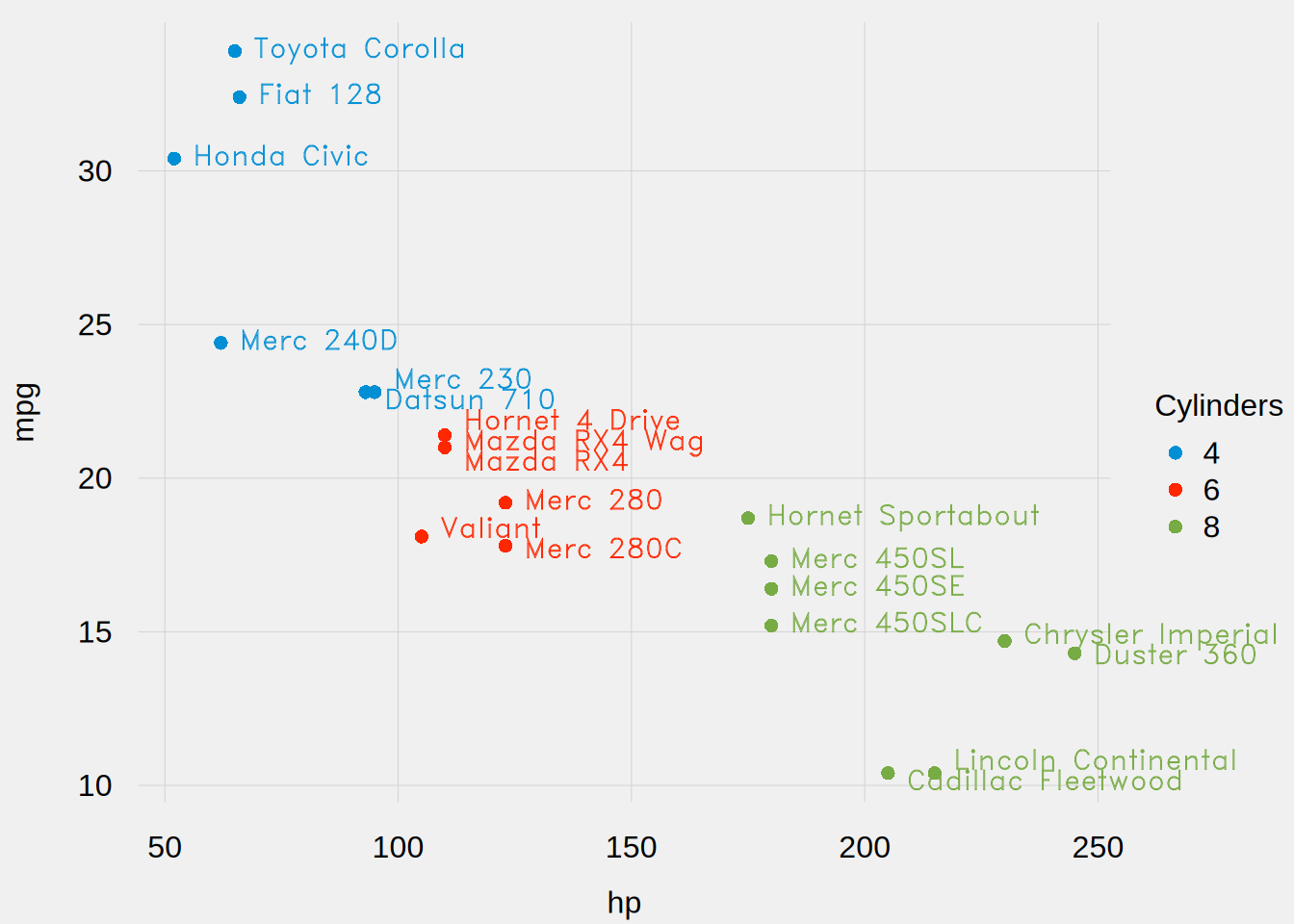
Logical or numeric controlling automatic repulsion of overlapping text labels. The default FALSE draws the labels at their exact (x,y) coordinates. TRUE nudges overlapping labels apart using a force-directed algorithm (labels are pushed off each other and then sprung back toward their original positions). A numeric value does the same but additionally enforces that much minimum padding (in user coordinates) between labels. Works best with the default centered text placement (i.e. without pos). Caveat: The repulsion logic currently operates within each group rather than across groups. So the text of different groups may still overlap. See Examples.
|
clim
|
Numeric giving the lower and upper limits of the character expansion (cex) normalization for bubble charts.
|